'%20stroke-width='9.5'%20stroke-linecap='round'%20stroke-linejoin='round'%20fill='none'%3e%3c/path%3e%3cpath%20d='M60,60%20C68.528,48.7%2074.318,44.475%2083.152,44.651%20C90.065,44.789%2097,49.147%2097,60%20C97,70.938%2090.073,74.743%2083.246,74.969%20C73.885,75.278%2068.272,70.71%2060,60'%20stroke='url(%23agr)'%20stroke-width='9.5'%20stroke-linecap='round'%20stroke-linejoin='round'%20fill='none'%20filter='url(%23as)'%3e%3c/path%3e%3c/svg%3e)
KNOWLEDGE THAT CLOSES MATERIAL LOOPS
Research institution, FFG-eligible, Consortium projects
The circular economy thrives on cooperation.
The by-products of one company can serve as input material for another. Closing material loops drastically reduces the need for primary raw materials. That is why Thinkubator forms research consortia - connecting companies with one another to advance the circular economy.
If you have an idea for a material loop that could be closed, get in touch at any time - we are happy to connect you with the right stakeholders.
HOW OUR RESEARCH TAKES SHAPE

Quality framework
Our own Scientific Code of Conduct, established in 2025 – internally binding for all Thinkubator research projects.
Recognised research institution
Since 2025 we have been a recognised research institution. This means we can also carry out funded contract research for companies.

CLOSED MATERIAL LOOPS DRASTICALLY CUT THE NEED FOR PRIMARY RAW MATERIALS.
1.0 M €
cumulative volume of research projects Thinkubator takes part in – full project budgets of all consortium partners.
1+
partners across 8 countries we work with on research questions and projects.
FOUR WAYS TO WORK WITH US
From a short trend analysis to a multi-year consortium project - we adapt the format to your question.
Innovation monitor
Sector-specific trend analyses, e.g. on the status quo and regulation of the circular economy in your industry.
Potential and feasibility studies
Analysis of specific questions and/or identification of the ecological and economic levers in your company.
FFG (small) project
As a research institution, Thinkubator's work can be handled and partly funded through the Austrian Research Promotion Agency (FFG).
Consortium projects
Would you like to submit a joint project to a national or EU funding body? We look forward to hearing from you.
Enquire about a consortium projectCURRENT PROJECTS
These are the research projects we are working on right now.
ReTraCC
Flagship project on carbon loops with 33 partners: we analyse the Austrian carbon value network, pilot circular use cases and lead the participatory stakeholder process.
View project
CIRCLOOPS
A cross-border consortium from Germany, Luxembourg, Austria and Switzerland: we turn the Digital Product Passport into a decision basis for reuse, refurbishment and recycling of long-lived industrial components.
View projectReDatCet
Servers are often replaced after five years just because manufacturer support ends. Together with IT service provider Compucons, we show companies how to safely run their hardware longer through third-party maintenance.
View projectReThermiQ
Used data centre hardware delivers computing power for AI and heat at the same time, right where heat is needed. We lead the work package on the circular perspective, focusing on end-of-life pathways for GPUs and RAM modules.
View projectRESULTS AND REPORTS
Here you find our most recent research projects and their results.
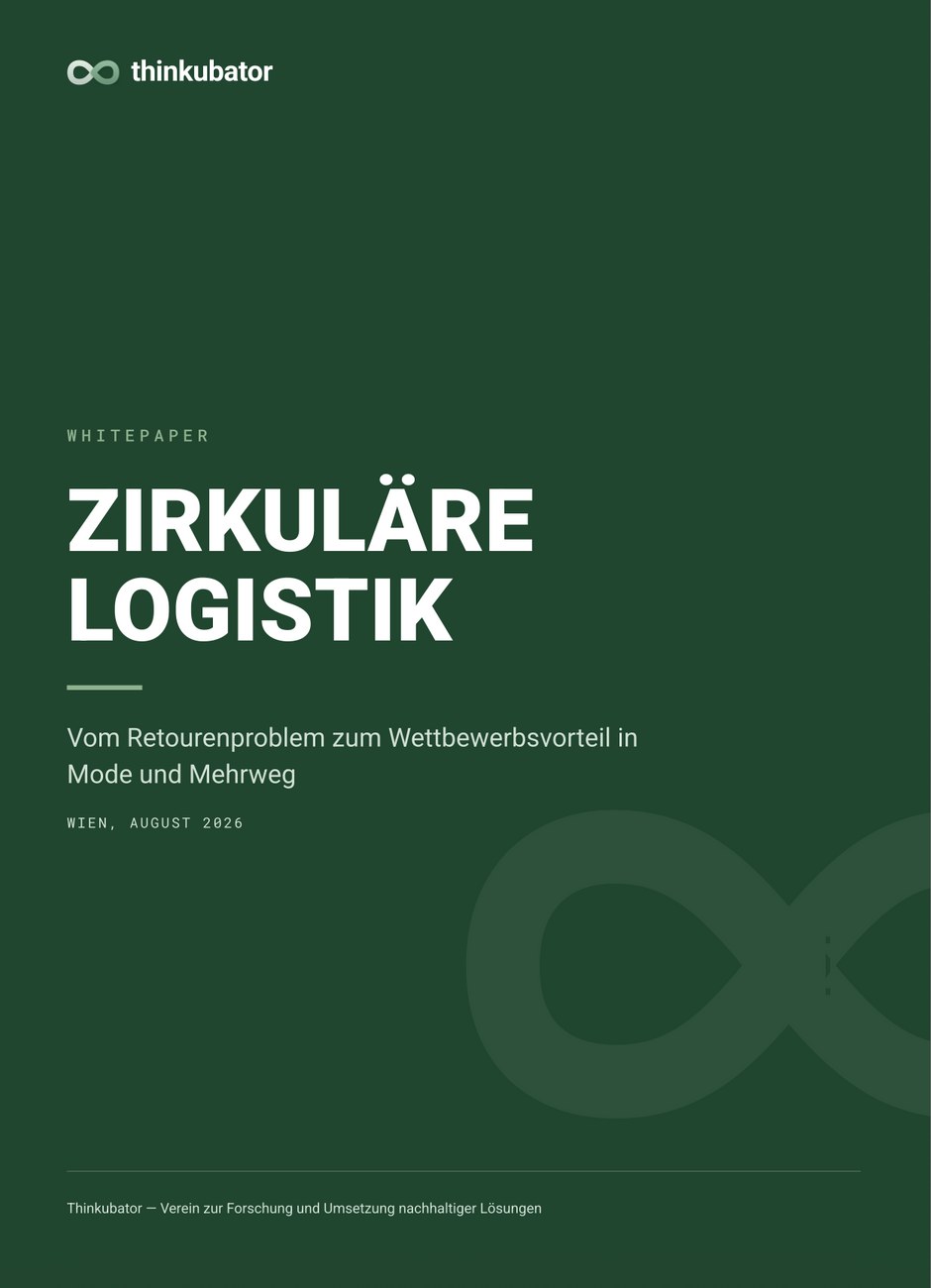
Circular Logistics
Our research team examined how companies can master the shift from linear to circular value creation through targeted reverse and circular logistics. This whitepaper inspires decision-makers to tap potential, overcome technological hurdles and implement concrete strategies for future-proof, efficient logistics.
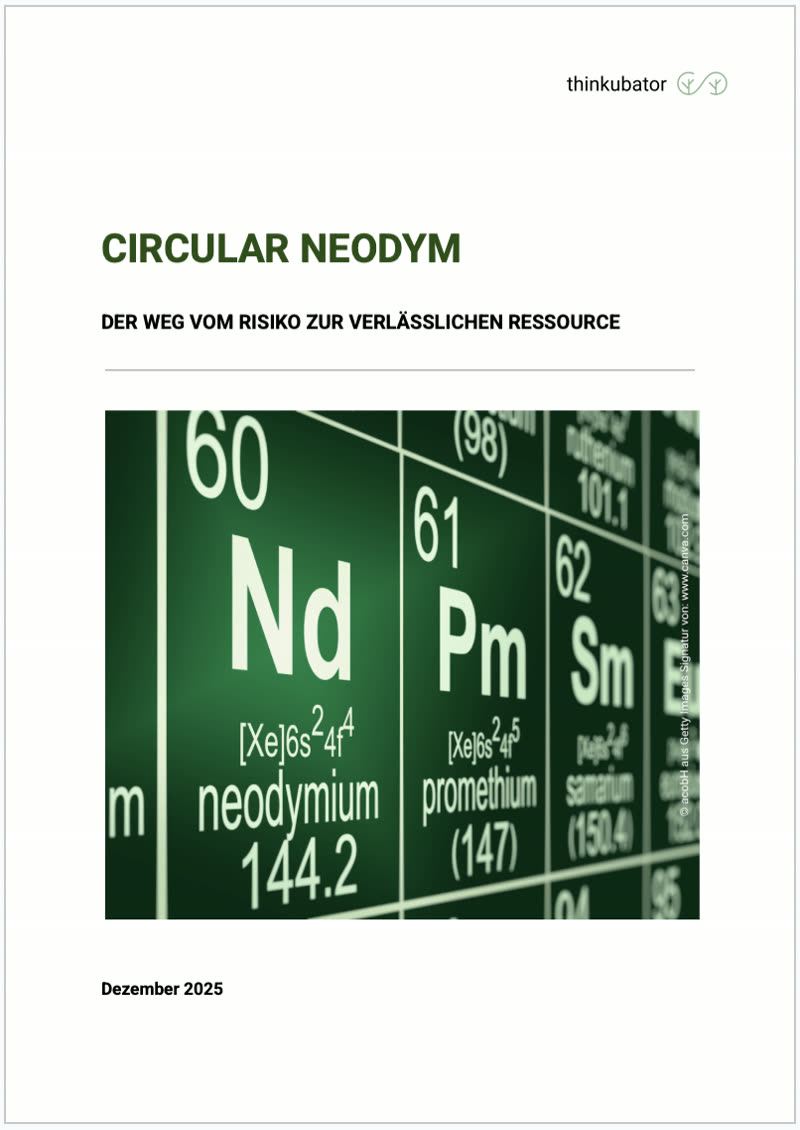
Circular Neodymium
At Thinkubator we look closely at how critical raw materials such as neodymium can be secured for the long term while being used resource-efficiently. This whitepaper supports decision-makers from policy, business and research in understanding the current situation, recognising potential and developing concrete options for action.
Circular Plastics Austria
In the FFG-funded project Circular Plastics Austria, Thinkubator explored how we can retain the benefits of plastics while drastically reducing their harmful impact on the environment and the climate. Alongside an overview of the current situation, our whitepaper shows which forward-looking solutions can accompany us towards a more sustainable use of plastics.
Circular Business Model +
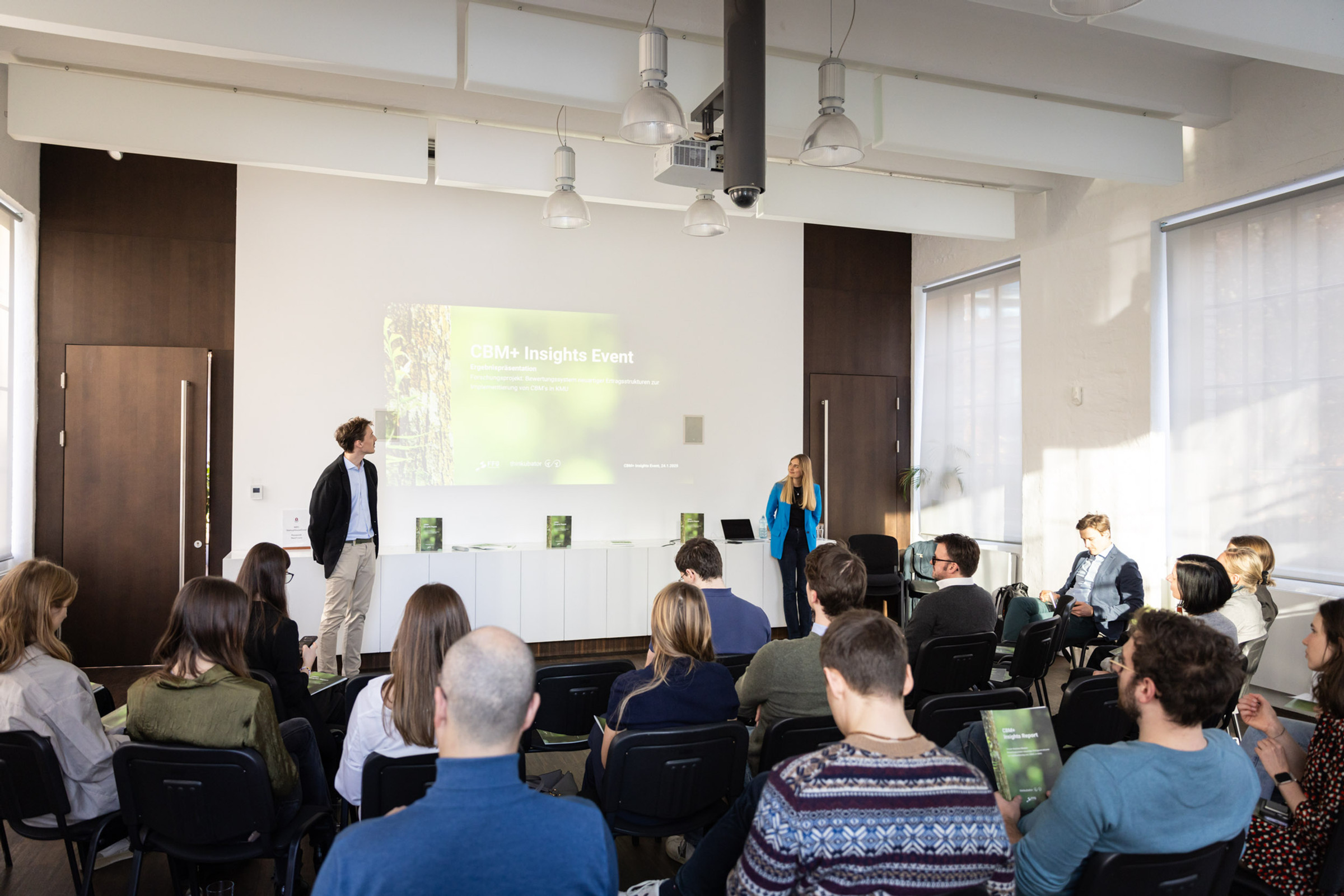
In the CBM+ project we researched the financing of the circular economy from 2023 to 2025 under the FFG Impact Innovation programme, together with the barriers Austrian SMEs face when implementing circular business models. To overcome those barriers we developed the Circ-Risk Tool. It allows companies to make the specific risks and opportunities of their circular business models visible, to prove the financial viability of their concepts and to build trust with investors.
GET IN TOUCH!
Do you have a research question or are you looking for project partners? Write to us directly.

Bastien Huber
Research projects, apprentice education & consultingBastien is responsible for our research projects, the apprentice training programmes and, on occasion, consulting. With a background in natural sciences, a master's degree in sustainability and circular economy and his professional experience, he brings well-founded knowledge and hands-on expertise across a wide range of sustainability topics.